
Ethereum Plunges Below $1,800 as Liquidations and ETF Outflows Mount
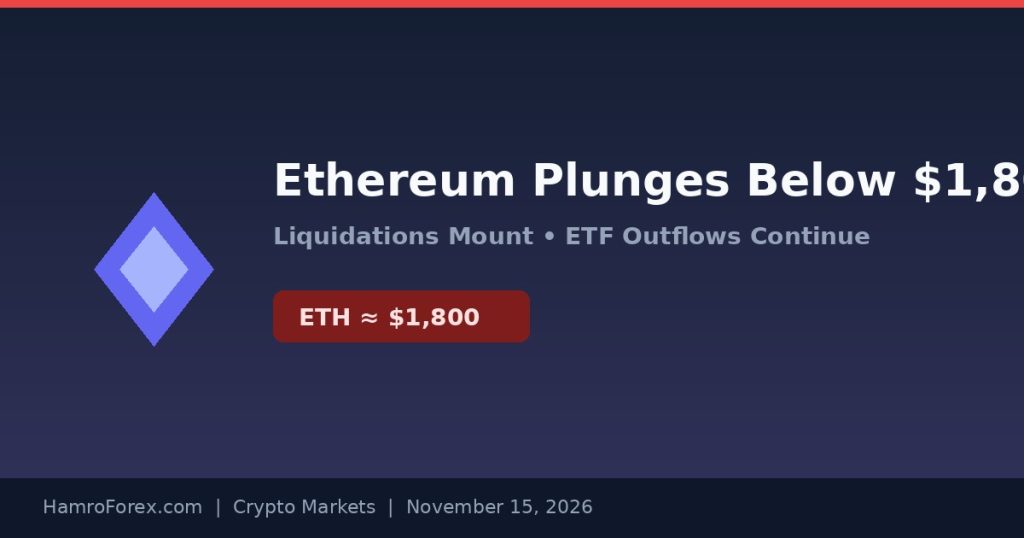
Ethereum (ETH) has plunged below the psychologically important $2,000 level and is trading near $1,800 on November 15, 2026, as liquidations accelerate and spot ETF outflows continue amid persistent Federal Reserve rate-hike expectations. The second-largest cryptocurrency is now down roughly 20% over the past week, reflecting extreme fear across digital-asset markets and broader risk-off sentiment driven by sticky inflation data.
BREAKING: Bitcoin Fear and Greed index hits 10.
— Crypto Rover (@cryptorover) November 15, 2026
EXTREME fear… 🩸
What Happened
Ethereum broke decisively below $2,000 earlier in the week and extended losses into the weekend. By early Sunday UTC, ETH was quoted in the $1,790–$1,820 range across major venues, with some snapshots showing dips toward $1,710–$1,730. This marks the lowest levels since mid-July according to several data providers.
The decline has been amplified by leveraged liquidations. Reports indicate hundreds of millions of dollars in ETH long positions were forced closed in recent sessions, with one 24-hour window showing roughly $200 million in ETH liquidations and broader crypto liquidations exceeding $1–2 billion. Spot Ethereum ETFs have also recorded consistent net outflows totaling more than $500 million over recent trading days, removing a key source of institutional demand.
The Crypto Fear & Greed Index has fallen to 10, signaling extreme fear. This coincides with ongoing weakness in Bitcoin, which has itself tested the low $60,000s.
Market Reaction
The sell-off is part of a wider risk-asset retreat. Bitcoin has traded near three-month lows around $62,000–$64,000. The US dollar remains firm near multi-month highs as markets price a high probability of another Federal Reserve rate hike at the December meeting. Treasury yields have stayed elevated, with the 10-year above 5% in recent sessions.
Gold and other non-yielding assets have also faced pressure from the stronger dollar and higher real yields, while oil has been relatively range-bound after earlier geopolitical-driven moves. The broader crypto complex, including major altcoins, has moved in tandem with ETH and BTC.
Why It Matters for Traders
The combination of ETF outflows, leveraged liquidations, and macro headwinds from sticky US inflation (October PPI rose 0.3% month-on-month and 6.5% year-on-year) has reduced near-term support for risk assets. Extreme fear readings have historically preceded both further declines and sharp short-covering rallies, so positioning remains critical.
Traders should note that weekend liquidity is thinner, which can exaggerate moves. When traditional markets reopen on Monday, ETF flow data, US retail sales, and any Fed speaker commentary will likely set the tone. For position sizing and risk management, use the HamroForex economic calendar and market hours tool to align with higher-liquidity windows, and track trades in the trading journal.
Key Levels / What to Watch Next
Immediate support for ETH sits in the $1,700–$1,750 zone. A sustained break below $1,700 could open the path toward the mid-$1,600s or lower. On the upside, $1,900–$2,000 now acts as resistance; a daily close back above $2,000 would be needed to improve the short-term technical picture.
- Monday US retail sales and any Fed commentary
- Fresh spot ETH and BTC ETF flow figures
- Bitcoin’s ability to hold the $60,000–$62,000 area
- Broader dollar strength and 10-year Treasury yield direction
Key takeaways:
- Ethereum is trading near $1,800 after breaking $2,000, down ~20% on the week.
- Hundreds of millions in liquidations and $500M+ ETF outflows have accelerated the move.
- Extreme fear (index at 10) and Fed hike bets remain the dominant drivers.
- Watch $1,700 support and $2,000 resistance, plus Monday’s data and ETF flows.
This article is for information only and is not financial advice.
Learn more: who we are · the risk disclaimer · contact us.
Educational content, not financial advice. Leveraged trading can lose more than your deposit.

Discussion
0 commentsNo comments yet. Start the discussion below.