
Forex Slippage Explained: Why Your Fill Price Differs and How to Reduce It
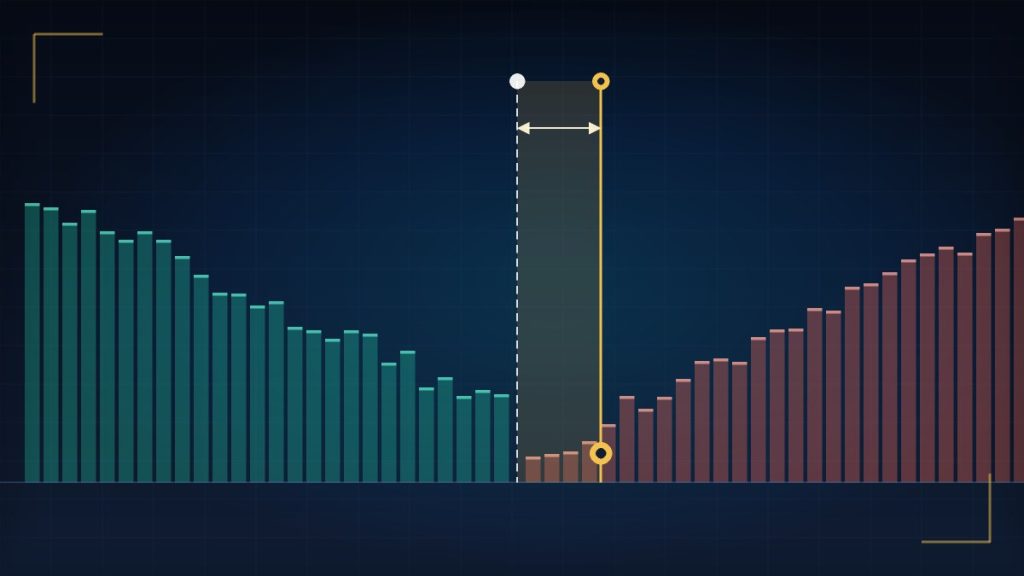
Slippage is the difference between the price you expected when you placed an order and the price at which it was actually filled. On a quiet day it can be too small to notice. When markets move fast, it can change the amount you really risk on a trade. Recent fast markets, such as the reaction to the US October inflation report covered in our CPI analysis and the yen’s run toward 160 in our USD/JPY intervention report, are the kind of conditions in which traders pay closer attention to execution.
This guide explains what slippage is, why it happens, how it affects your risk and what you can do about it. It is educational content and not trading advice.
What Is Slippage in Forex?
Slippage occurs when your order is filled at a different price from the one you requested or saw quoted. BabyPips’ Forexpedia describes three outcomes: no slippage, positive slippage and negative slippage.
| Outcome | What happens | Illustrative example (buy EUR/USD at 1.0850) |
|---|---|---|
| No slippage | The order fills at the requested price | Filled at 1.0850 |
| Positive slippage | The order fills at a better price than requested | Filled at 1.0848, which is 2 pips better |
| Negative slippage | The order fills at a worse price than requested | Filled at 1.0853, which is 3 pips worse |
The numbers above are hypothetical and only illustrate the definition.
Why Slippage Happens
Slippage is a result of how markets and execution work, and several factors can combine:
- Volatility. Prices can move between the moment you click and the moment your order reaches the market. Scheduled events such as inflation reports, central bank decisions and jobs data are common triggers. You can see them on the HamroForex Economic Calendar.
- Thin liquidity. Liquidity describes how easily you can trade without moving the price. When fewer buyers and sellers are active, such as around the daily rollover, during holidays or outside the main sessions, there is less depth at each price. Our guide to forex trading sessions shows when liquidity is usually strongest.
- Order size. A large order may need to be matched across several price levels, so the average fill can be worse than the first quoted price.
- Gaps. When the market opens after a weekend or jumps on a headline, there may be no trading at the price you chose, so a pending order is filled at the next available price.
- Execution speed and model. Platform, internet and broker latency all add delay, and brokers differ in how they route and fill orders. Read your broker’s order execution policy.
Which Orders Are Affected by Slippage?
| Order type | How it fills | Slippage risk |
|---|---|---|
| Market order | Fills immediately at the best available price | Can be positive or negative; most exposed in fast markets |
| Stop-loss or stop entry | Becomes a market order once the trigger price is reached | Negative slippage is more likely in fast moves, and the fill can be beyond your stop price |
| Limit order | Fills at your price or better | No negative slippage, but the order may not fill at all |
| Guaranteed stop (if your broker offers it) | The broker guarantees the stop price under its terms | Removes slippage on the stop, but availability and any extra cost vary by broker |
The key point is that a standard stop-loss is not a promise of an exact exit price. BabyPips notes that slippage can occur on stop orders too.
How Slippage Changes the Risk You Actually Take
Suppose you plan to risk 20 pips on EUR/USD. For a pair quoted in US dollars, one pip is worth roughly $10 per standard lot. These numbers are illustrative:
| Position size | Planned risk (20-pip stop) | Stop filled 5 pips worse (25 pips) | Extra loss | Increase vs plan |
|---|---|---|---|---|
| 1.0 lot | $200 | $250 | $50 | 25% |
| 0.5 lot | $100 | $125 | $25 | 25% |
| 0.2 lot | $40 | $50 | $10 | 25% |
The percentage is the same at every size because it depends on pips, not lot size. A trader who risked 1% of the account per trade is suddenly risking about 1.25% on that trade. Slippage also reduces your effective reward-to-risk ratio, which we cover in our guide to risk-to-reward ratio and expectancy. A string of such losses can deepen a drawdown.
Slippage is not the same as the spread. The spread is the gap between the bid and ask price and is part of the quote, as we explain in Forex Spreads Explained. Slippage is the difference between the price you expected and the price you received. Both are trading costs.
Practical Ways to Reduce Slippage
- Trade liquid pairs and sessions. Major pairs during busy periods, such as the London and New York overlap, generally offer more depth. Use the Forex Market Hours tool to check which sessions are open.
- Be careful with market orders around high-impact news. Consider smaller size, a limit order, or staying out until volatility settles.
- Build slippage into your position size. Assume your stop could fill worse than planned during events. Size with the Risk Management Calculator and our lot size guide, and keep risk per trade low enough to absorb it.
- Use limit orders for entries when you can. You may miss some trades, but you avoid paying up to chase the price.
- Check your platform’s settings. Many platforms, including MetaTrader, let you set a maximum price deviation. A tighter setting protects against large slippage but can cause more rejected or requoted orders.
- Reduce delay. A stable connection helps, and traders running automated strategies may consider a VPS close to their broker’s server.
- Plan for gaps. If your strategy cannot tolerate a weekend gap, reduce size or close before the weekend.
- Measure your own slippage. Record the requested price and the fill price for every trade in the Forex Trading Journal. After a few weeks you will see which pairs, times and order types cost you most.
Common Slippage Mistakes
- Assuming a stop-loss will always close the trade at exactly the stop price.
- Using full-size positions into major releases because the stop is “protecting” the trade.
- Ignoring slippage and spread in backtests, which can make a strategy look better than it will perform live.
- Blaming a broker without data. Your journal can show whether slippage is mostly negative, mostly positive or random.
- Chasing the price with a market order after missing an entry.
Frequently Asked Questions
Can slippage be positive? Yes. Your order can fill at a better price than requested, although you should not build a strategy around it.
Does a stop-loss guarantee my exit price? No. A standard stop becomes a market order when triggered and can fill at a worse price in fast conditions. Only a guaranteed stop, where offered, fixes the price, usually under specific terms.
Is slippage the same as the spread? No. The spread is the difference between bid and ask. Slippage is the difference between the expected and the actual fill.
Can I avoid slippage completely? No, but you can reduce it by choosing liquid times, using suitable order types and sizing positions with a margin for error.
Key Takeaways
Slippage is a normal part of trading, and it matters most when liquidity is thin or prices are moving quickly. Treat your stop as a planned exit rather than a guarantee, size positions so that a worse fill does not break your risk limits, and track real fills so your decisions rest on evidence.
Trading leveraged products such as forex and CFDs carries a high risk of loss. This article is for educational purposes only and is not financial advice. Read our disclaimer.
Learn more: who we are · the risk disclaimer · contact us.
Educational content, not financial advice. Leveraged trading can lose more than your deposit.

Discussion
0 commentsNo comments yet. Start the discussion below.