How to Use Fibonacci Retracement in Forex Trading

Last updated
Learn how to use Fibonacci retracement in forex to identify key support and resistance levels, time entries, and build a winning trading strategy.
How to Use Fibonacci Retracement in Forex to Find High-Probability Trade Setups
If you want to trade forex with more precision, knowing how to use Fibonacci retracement in forex is one of the most powerful skills you can develop. Derived from a 13th-century mathematical sequence, Fibonacci retracement has become a cornerstone tool in modern technical analysis used by retail traders, institutional desks, and hedge funds alike.
This guide breaks down everything you need: what Fibonacci levels mean, how to draw them correctly, how to combine them with price action, and how to avoid the mistakes that cost traders money.
What Is Fibonacci Retracement? (Fibonacci Retracement Explained)
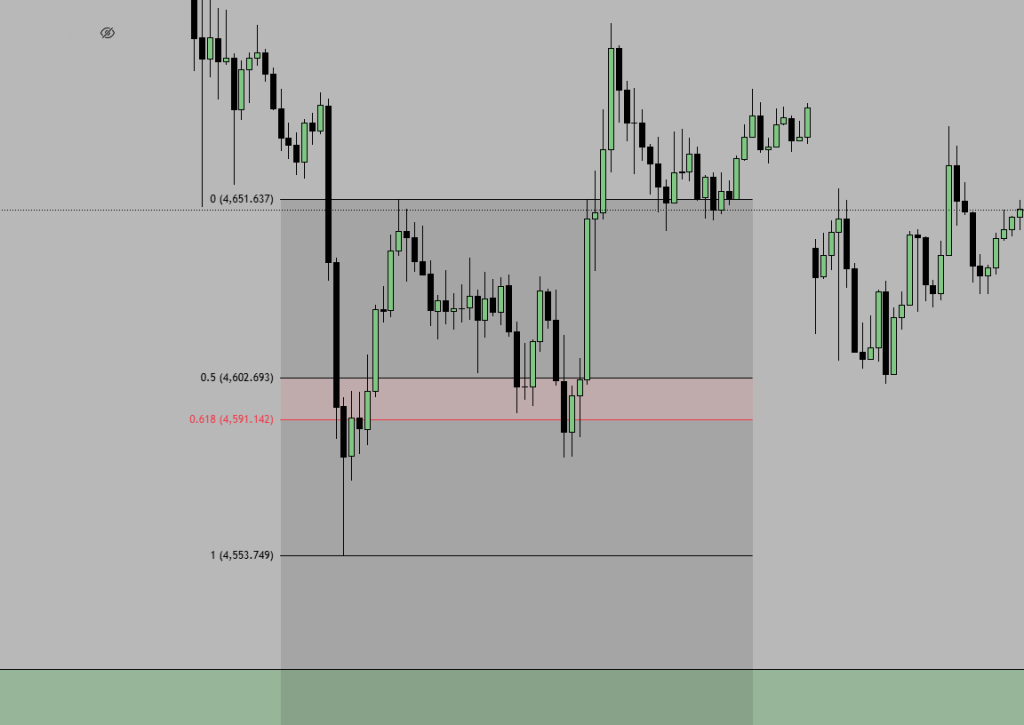
Fibonacci retracement is a technical analysis tool that uses horizontal lines to identify potential support and resistance levels based on the Fibonacci sequence. The key retracement levels are:
- 23.6%
- 38.2%
- 50% (not a true Fibonacci number but widely observed)
- 61.8% — the “Golden Ratio,” the most respected level
- 78.6%
These percentages represent how far price has pulled back against the prior trend. The core idea: after a strong move, price rarely reverses in a straight line. It retraces partially before continuing in the original direction.
The 61.8% level, often called the Golden Ratio, appears consistently in nature, architecture, and financial markets. When price pulls back to this zone and stalls, it signals that buyers or sellers are re-entering the market at a value area.
How to Draw Fibonacci Retracement Correctly
Knowing how to draw Fibonacci retracement is where most beginners go wrong. Here is the exact process:
Step 1: Identify a clear swing high and swing low You need a significant price move a clean, impulsive rally or sell-off on at least a 1-hour chart or higher timeframe.
Step 2: Apply the tool in the correct direction
- In an uptrend: drag from the swing low to the swing high
- In a downtrend: drag from the swing high to the swing low
Step 3: Wait for price to retrace into a key level Watch how price behaves at the 38.2%, 50%, or 61.8% levels. A rejection candle, pin bar, or engulfing pattern at these zones is your trading signal.
Step 4: Confirm with additional factors Never trade a Fibonacci level in isolation. Use volume, moving averages, or candlestick patterns to confirm.
Most forex platforms – MetaTrader 4, MetaTrader 5, TradingView have a built-in Fibonacci forex indicator. On MT4, go to Insert → Fibonacci → Retracement.
Fibonacci Retracement Levels Forex Traders Watch Most
Not all levels carry equal weight. Here is how experienced traders rank them:
61.8% – The Golden Ratio The most respected level. Price frequently finds strong support or resistance here. Institutional traders often place limit orders at this zone.
50% – The Midpoint Psychologically significant. A 50% retracement often attracts fresh orders from traders who missed the initial move.
38.2% – Shallow Retracement Seen in very strong trends. If price only pulls back to 38.2%, it signals powerful momentum. Conservative traders use this level to add to winning positions.
78.6% – Deep Retracement Less common but valid. A bounce from 78.6% means the trend is still intact just barely. A break below (or above in a downtrend) often signals a full reversal.
Fibonacci Trading Strategy Forex: 3 Proven Approaches
Strategy 1: Fibonacci + Price Action Confluence
Learning how to combine Fibonacci with price action is the most reliable approach. Here is how:
- Identify a swing move on the 4-hour or daily chart
- Draw your Fibonacci retracement
- Look for price action signals (pin bars, inside bars, engulfing candles) at the 50% or 61.8% level
- Enter on the close of the signal candle
- Place your stop loss just beyond the next Fibonacci level
- Target the previous swing high or low (at minimum a 1:2 risk-reward)
This works because you have two independent reasons to take the trade: a mathematical level and a confirmed price rejection.
Strategy 2: Fibonacci + Moving Average Confluence
When a key Fibonacci level aligns with a 20 EMA or 200 SMA, the probability of a bounce increases significantly. Traders call this a “confluence zone.” Two tools pointing to the same area create a stronger signal than either would alone.
Strategy 3: Fibonacci Retracement for Intraday Trading
Fibonacci retracement for intraday trading works best on the 15-minute and 1-hour charts. Use the previous session’s high and low as your anchor points. Apply the Fibonacci grid and watch for rejections at the 38.2% or 61.8% level during the London-New York overlap the highest liquidity window in forex.
Does Fibonacci Retracement Work in Forex?
This is one of the most asked questions among new traders: does Fibonacci retracement work in forex?
The answer is yes but with important caveats.
Fibonacci levels work because enough market participants believe in them and act on them. This creates a self-fulfilling dynamic, especially at the 61.8% level. Studies in technical analysis research consistently show that price interacts with these levels more often than random chance would predict.
However, Fibonacci is not a magic indicator. It does not work in choppy, sideways markets. It works best in trending conditions with clear swing points.
A 2022 survey of professional forex traders by the Society of Technical Analysts found that Fibonacci tools were among the top five most-used indicators across all experience levels confirming their real-world utility.
Fibonacci Retracement Mistakes to Avoid
Even experienced traders make these errors. Avoid them to protect your capital:
Mistake 1: Drawing from the wrong points Always use the most significant swing highs and lows. Using minor, insignificant pivots produces unreliable levels.
Mistake 2: Trading without confirmation A price touching a Fibonacci level is not a trade signal. Wait for a candlestick pattern or volume spike to confirm rejection.
Mistake 3: Using Fibonacci on low timeframes in isolation The 1-minute and 5-minute charts have too much noise. Always draw your Fibonacci levels on a higher timeframe first.
Mistake 4: Ignoring the trend Fibonacci retracement works best in the direction of the prevailing trend. Trying to pick reversals against a strong trend with Fibonacci alone is high-risk.
Mistake 5: Treating every level as equal The 61.8% and 50% levels deserve more respect than the 23.6%. Weight your entries accordingly.
Real-World Example: EUR/USD 61.8% Retracement Trade
In Q1 2024, EUR/USD staged a strong rally from 1.0700 to 1.0950 on the daily chart. Applying a Fibonacci retracement from the swing low to the swing high placed the 61.8% level at approximately 1.0795.
Price retraced to that zone over five trading sessions and printed a bullish engulfing candle. Traders who entered long at 1.0800, with a stop below 1.0750 and a target at 1.0950, captured a clean 1:3 risk-reward trade exactly the kind of setup Fibonacci is designed to identify.
This is Fibonacci retracement explained through real market behavior: a mathematical level combined with price action, resulting in a high-quality entry.
Pros and Cons of Using Fibonacci in Forex
Pros:
- Applicable to all currency pairs and timeframes
- Objective levels remove emotional bias
- Works with nearly any other technical tool
- Widely used, creating self-fulfilling support/resistance
Cons:
- Subjective in choosing swing points
- Less effective in ranging markets
- Requires confirmation not a standalone system
- Can produce false signals during high-impact news events
Mastering how to use Fibonacci retracement in forex will not happen overnight but it is one of the most transferable and powerful skills in a trader’s toolkit. Focus on drawing your levels from significant swings, prioritizing the 50% and 61.8% zones, and always combining Fibonacci levels trading signals with price action confirmation.
Avoid the common mistakes, stay disciplined with your stop placement, and never treat a Fibonacci level as a guaranteed reversal. Used correctly, this tool gives you a systematic, repeatable edge that works across all major pairs and market conditions.

FAQ: Fibonacci Retracement in Forex
Q1: What are the most important Fibonacci retracement levels in forex? The 38.2%, 50%, and 61.8% levels are the most widely followed. The 61.8% (Golden Ratio) is considered the most significant because it represents the most balanced retracement before a trend continuation.
Q2: How do I draw Fibonacci retracement correctly on a forex chart? In an uptrend, drag the Fibonacci tool from the swing low to the swing high. In a downtrend, drag from the swing high to the swing low. Always anchor your tool to the most recent, significant swing points on a 1-hour chart or higher.
Q3: Does Fibonacci retracement work in forex markets? Yes, Fibonacci retracement works in forex, particularly in trending markets. Its effectiveness is reinforced by the large number of traders who monitor these levels, creating real demand and supply reactions at key zones.
Q4: Can I use Fibonacci retracement for intraday forex trading? Yes. Fibonacci retracement for intraday trading is effective on 15-minute and 1-hour charts. Use the prior session’s high and low as your reference swing points and look for setups during high-volume sessions like London and New York.
Q5: What is the biggest mistake traders make with Fibonacci retracement? The most common mistake is entering a trade the moment price touches a Fibonacci level without waiting for confirmation. Always look for a candlestick signal, volume reaction, or confluence with another indicator before placing your trade.
Learn more: who we are · the risk disclaimer · contact us.
Educational content, not financial advice. Leveraged trading can lose more than your deposit.