
Master the ICT Suspension Block 2026
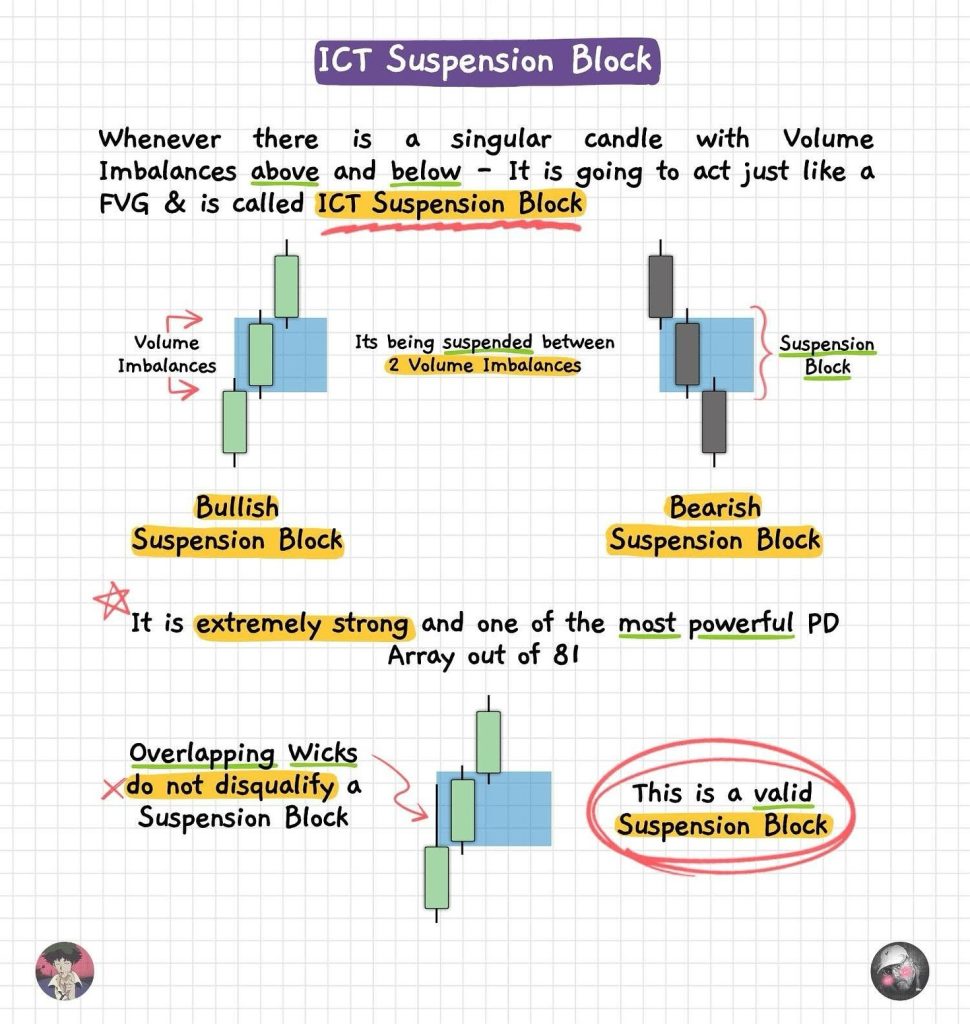
If you want to master the ICT Suspension Block 2026, you need more than a surface-level definition. This concept, rooted in the Inner Circle Trader (ICT) methodology, is one of the most precise liquidity tools available to retail traders today. When applied correctly, it identifies exact price levels where smart money is likely to re-enter the market, giving you a consistent edge whether you trade forex, futures, or crypto.
This guide breaks down what the Suspension Block is, how it forms, how to trade it with precision, and the key differences between bullish and bearish setups. Every section is built from real market mechanics, not theory alone.
Check Forex Hours: https://hamroforex.com/forex-hours/
What Is ICT Suspension Block?
The ICT Suspension Block is a specific price structure where a candle or series of candles creates an area of inefficiency between two price points. Unlike a standard Fair Value Gap (FVG), it is defined by a near-complete suspension of buying or selling pressure on one side of the market.
Think of it as a zone where price briefly floated before being propelled aggressively in one direction. The market tends to return to these zones to deliver price, fill orders, and continue its original direction.
How It Differs From a Standard Order Block
A traditional order block marks the last up or down candle before a significant move. The Suspension Block goes further. It captures the precise area where directional pressure was so dominant that opposing orders were effectively absent. This is what creates the suspension effect: price moved through the zone with almost no friction.
Key distinctions:
- Standard order blocks are defined by candlestick bodies alone
- Suspension Blocks incorporate the concept of ICT Volume Imbalance, which is the gap between a candle’s body and the opposing candle’s wick
- Suspension Blocks are typically smaller, tighter zones and therefore higher-precision entry tools
- They require a displacement move (a strong impulse candle) to validate the structure
ICT Volume Imbalance: The Foundation
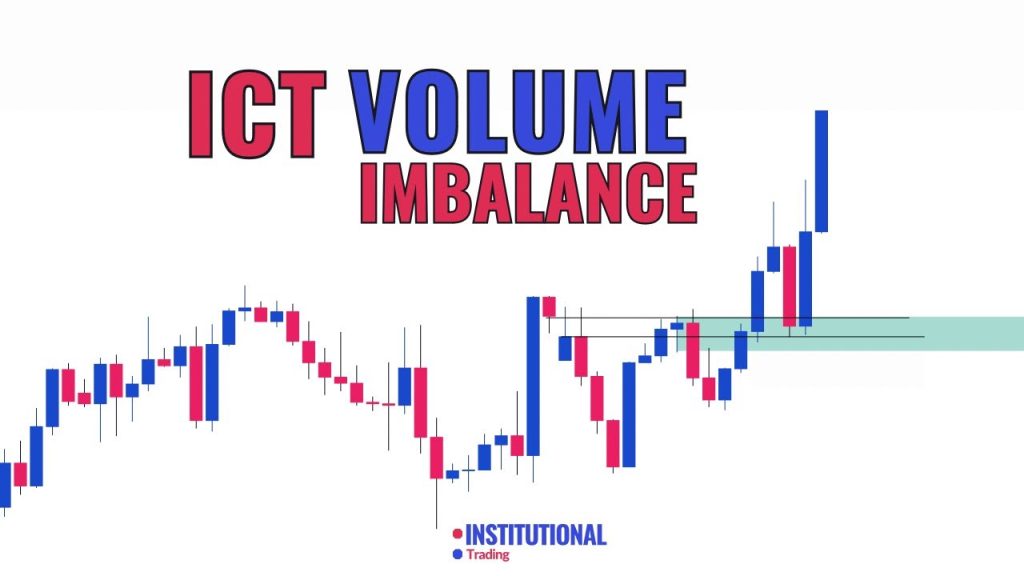
To fully understand the Suspension Block, you must first understand ICT Volume Imbalance. This occurs when a bullish candle’s low is higher than the previous bearish candle’s high (or vice versa), leaving a visible price gap where no two-sided trading occurred.
This gap represents unfilled institutional orders. Smart money algorithms are programmed to return to these areas and pair their remaining orders, which is exactly why price revisits these zones with such precision.
Expert insight: Not all Volume Imbalances produce valid Suspension Blocks. The imbalance must occur within or adjacent to a breaker or shift in market structure on a higher timeframe to carry institutional weight. Always anchor your analysis top-down. Start from the daily or 4H chart before marking Suspension Blocks on the 15M or 5M.
Bullish vs. Bearish Suspension Block
Bullish Suspension Block
A Bullish Suspension Block forms during a bearish displacement leg followed by a strong reversal upward. The suspended zone sits below current price. It is the area price rushed through before launching higher. When price returns to this zone, it should act as support.
Characteristics of a valid Bullish Suspension Block:
- Located at or near a swing low with liquidity (equal lows, prior session lows)
- Formed during the killzone window (London open or New York AM session)
- Accompanied by a visible Volume Imbalance between two candles
- Price should not have traded back through the zone before your entry
- Confirmation: a bullish displacement candle leaving the zone after the revisit
Bearish Suspension Block
A Bearish Suspension Block forms during a bullish displacement move followed by a sharp reversal downward. The zone floats above current price and acts as resistance upon retest.
Characteristics of a valid Bearish Suspension Block:
- Sits above price after a bearish market structure shift
- Formed within a premium array (price above equilibrium of a range)
- The imbalance body should be well-defined with minimal wick overlap
- Best confirmed when aligned with a higher-timeframe Point of Interest (POI)
- Confirmation: a rejection wick or bearish engulfing candle at the zone
How to Trade the ICT Suspension Block: Step-by-Step
Learning how to trade the ICT Suspension Block comes down to a repeatable process. Here is the framework used by experienced ICT traders:
- Top-down analysis: Identify the higher-timeframe (HTF) bias using the daily and 4H charts. Determine whether price is in a discount or premium zone and confirm the prevailing order flow direction.
- Mark institutional reference points: Identify the nearest liquidity pools (swing highs/lows, equal highs/lows) and major POIs including order blocks, FVGs, and breakers.
- Drop to execution timeframe: Use the 5M, 3M, or 1M chart during the killzone window. Look for a displacement candle that creates a Volume Imbalance.
- Identify the Suspension Block: Mark the exact body of the candle or candles that created the imbalance. This defined range is your zone.
- Wait for the retracement: Price must retrace into the zone. Do not anticipate. Only react once price has reached the level.
- Entry confirmation: Look for a lower-timeframe market structure shift (MSS) inside the zone. This is a small displacement candle leaving the zone after the initial touch.
- Define risk: Place your stop loss below the zone for bullish trades or above the zone for bearish trades, with a buffer of 2 to 5 pips or ticks depending on the instrument.
- Target liquidity: Set your first take-profit at the nearest opposing liquidity pool. Scale out or trail to the next HTF target from there.
Real-world example: On March 4, 2025, during the London open on GBP/USD, price swept equal lows at 1.2680 and created a bullish displacement candle on the 3M chart. The Suspension Block formed between 1.2692 and 1.2698. Price retraced into this zone at 8:42 AM London time, produced an MSS on the 1M chart, and rallied 47 pips to the prior Asian session high. This translated to a clean 3.9R trade.
Pros, Cons, and Key Insights
Advantages
- High-precision entry zones with tighter stops and better risk-to-reward
- Grounded in liquidity theory rather than indicator lag
- Works across all liquid markets including forex, futures, indices, and crypto
- Repeatable and rule-based, which reduces emotional decision-making
- Combines well with ICT killzones and higher-timeframe session bias
Limitations
- Requires significant screen time to identify valid setups correctly
- Not all Volume Imbalances produce a valid Suspension Block
- Low-liquidity instruments produce unreliable and untradeable zones
- Steep learning curve for traders who are new to the ICT methodology
- Context-dependent: a zone without HTF confluence is low quality
Mistakes to Avoid
- Trading Suspension Blocks against the higher-timeframe trend
- Entering without an entry confirmation model such as an MSS or a second trigger
- Marking zones on illiquid instruments or during low-volume sessions
- Targeting too aggressively past the first major liquidity pool
- Confusing a standard Fair Value Gap with a Suspension Block, as they are not the same structure
To master the ICT Suspension Block 2026, you need three things working together: a clear higher-timeframe bias, a valid zone formed during a displacement move, and a lower-timeframe entry confirmation. When these align within a killzone, the Suspension Block is one of the most reliable entries in the ICT toolkit.
Whether you are trading a Bullish Suspension Block off a liquidity sweep or fading a Bearish Suspension Block in a premium zone, consistency comes from process. Mark your levels objectively, wait for price to come to you, and let the confirmation do the work.
The traders who perform best with this concept in 2026 are those who treat it as a precision tool and not a shortcut. Study the context, respect the killzones, and log every trade. Over time, the edge becomes undeniable.
FAQ
What is an ICT Suspension Block?
An ICT Suspension Block is a price zone created when a strong displacement move leaves an area of near-zero opposing order flow, known as a Volume Imbalance, between two candles. Price tends to return to this zone, which then acts as support (in a bullish setup) or resistance (in a bearish setup) before continuing in the direction of the original impulse.
How is a Suspension Block different from a standard Order Block?
A standard ICT Order Block is the last bullish or bearish candle before a significant move. A Suspension Block is narrower and more specific. It captures the ICT Volume Imbalance created by a displacement candle, meaning the exact price range where no two-sided trading occurred. It is a higher-precision sub-concept within the broader order block framework.
What is ICT Volume Imbalance and how does it relate to the Suspension Block?
ICT Volume Imbalance occurs when the body of a candle does not overlap with the body of the adjacent candle, leaving a gap in price action where only one-sided institutional orders were filled. The Suspension Block is defined by this imbalance, making Volume Imbalance the structural foundation of every valid Suspension Block setup.
How do you trade a Bullish Suspension Block?
To trade a Bullish Suspension Block, first confirm a bullish HTF bias. Wait for price to displace bearishly and create a volume imbalance, then look for a retracement back into that zone during a London or New York killzone. Enter long after a lower-timeframe market structure shift confirms smart money is defending the level. Place your stop below the zone and target the nearest liquidity pool above.
Does the ICT Suspension Block work on all timeframes?
Yes, but context determines quality. Suspension Blocks identified on lower timeframes (1M to 15M) carry the most weight when they align with a higher-timeframe (4H or daily) point of interest. Standalone lower-timeframe setups without HTF confluence carry lower probability and should be approached with caution.
Learn more: who we are · the risk disclaimer · contact us.
Educational content, not financial advice. Leveraged trading can lose more than your deposit.