
Smart Money Concepts (SMC) – Market Structure, OB, FVG, Liquidity, IDM and Premium & Discount Zones
Last updated
Smart Money Concepts, commonly known as SMC, is a price action trading methodology that attempts to decode the behavior of large institutional participants banks, hedge funds, and market makers and align retail trades with their footprints. Rather than relying on lagging indicators like RSI or MACD, SMC traders read raw price structure to understand where institutions are likely to enter, exit, and hunt liquidity.
What Is Smart Money?
“Smart money” refers to institutional traders entities managing billions of dollars in capital. Because of their sheer size, these players cannot simply click “buy” and get filled; they must accumulate and distribute positions systematically across specific price zones. SMC theory holds that all significant price movement is a direct consequence of institutional order flow, not retail sentiment.
Journal your trades – Click Here
Market Structure
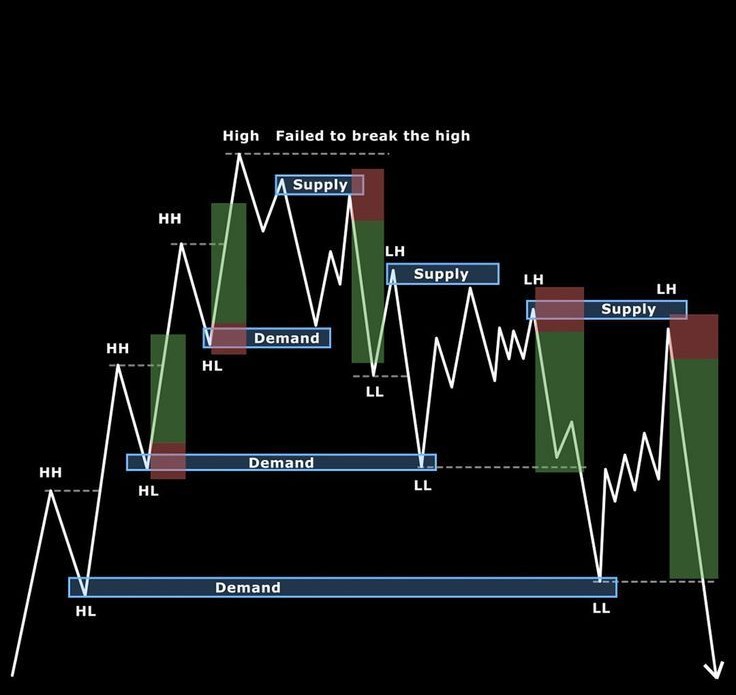
Market structure is the backbone of SMC. Before anything else, traders must identify the current trend by tracking swing highs and swing lows.
Bullish market structure is defined by a series of Higher Highs (HH) and Higher Lows (HL) each swing high breaks above the previous one, and each pullback stays above the prior low.
Bearish market structure is defined by Lower Highs (LH) and Lower Lows (LL) the price consistently makes lower peaks and lower troughs.
Break of Structure (BOS) vs. Change of Character (CHoCH)
Two events in market structure carry outsized significance:
A Break of Structure (BOS) occurs when price decisively closes beyond a previous swing high or low in the direction of the existing trend. It confirms trend continuation and signals institutional momentum.
A Change of Character (Choch) is a BOS that happens against the prevailing trend breaking a swing low in a bullish trend, for example. This is the first warning sign that the structure may be reversing. Smart money traders use Choch as an early entry signal for counter-trend or reversal positions.
Order Blocks (OB)
Order blocks are arguably the most powerful concept in SMC. An order block is the last bearish candle before a bullish impulse, or the last bullish candle before a bearish impulse. It marks the zone where institutional orders were placed just before price moved aggressively.
Why do order blocks matter? When price later returns to that zone, unfilled institutional orders may still be resting there. Smart money traders anticipate a reaction a bounce or reversal when price revisits these areas.
How to identify a bullish order block:
- Look for a strong bullish impulse that breaks structure upward
- Find the last bearish (red/down) candle immediately before that impulse
- Mark the high and low of that candle as your order block zone
- Wait for price to return and look for confirmation of a reaction
Mitigation refers to when price trades back through an order block. A mitigated order block loses significance; traders favor unmitigated order blocks for entries.
Fair Value Gaps (FVG)
A Fair Value Gap (also called an imbalance or inefficiency) forms when price moves so aggressively that it leaves a visible gap between three consecutive candles the wicks of the first and third candle do not overlap the body of the middle candle.
FVGs represent zones where price traded in only one direction, leaving an imbalance in the order book. Smart money theory suggests that price has a strong tendency to return and fill these gaps before continuing the original move. Traders use FVGs as:
- Re-entry zones after a pullback
- Confluence with order blocks for high-probability setups
- Targets when already in a position
Liquidity
Liquidity is the fuel smart money needs to execute large orders. In SMC, liquidity pools are found at obvious price levels where retail traders have clustered their stop losses.
Sell-side liquidity sits below swing lows and recent support levels. Retail traders who bought at support place their stop losses just below creating a pool of sell orders that smart money can use as buy liquidity.
Buy-side liquidity sits above swing highs and resistance. Retail breakout buyers place stops above providing a pool of buy orders that institutions use to sell into.
The concept of a liquidity sweep (or “stop hunt”) describes the behavior where price briefly spikes through a liquidity level, grabs those stop orders, and then reverses sharply. SMC traders look for these sweeps as confirmation that institutional positioning has occurred and a move in the opposite direction is imminent.
Premium & Discount Zones
A core entry principle in SMC is the equilibrium framework. Any swing move from a low to a high can be divided by the 50% midpoint (equilibrium):
- Premium zone: the upper 50% of the range considered expensive. SMC traders look to sell in premium.
- Discount zone: the lower 50% of the range considered cheap. Traders look to buy in discount.
The ideal buy entry is a bullish order block or FVG sitting in the discount zone of the current swing. The ideal sell entry is a bearish order block or FVG in the premium zone. This filtering alone eliminates a large number of low-quality setups.
Inducement
Inducement is a deliberately placed liquidity trap. Before targeting major liquidity pools, smart money often creates a minor swing high or low to “induce” retail traders into entering prematurely only to sweep those positions on the way to the real target.
Recognizing inducement prevents traders from chasing early entries. The pattern typically looks like: price creates a small, tempting swing high → retail traders enter shorts → price sweeps those stops → price reverses lower toward the actual sell-side liquidity below.
A standard SMC trade unfolds in these steps:
Step 1 – Identify the higher-timeframe trend. Use daily or 4-hour charts to determine the prevailing market structure. Only take trades aligned with the dominant direction.
Step 2 – Wait for a CHoCH or BOS. On a lower timeframe (1-hour or 15-minute), look for a structural shift that signals institutional entry.
Step 3 – Identify the Point of Interest (POI). Find the order block or FVG created during the move that caused the structure break. Confirm it sits in the discount zone (for buys) or premium zone (for sells).
Step 4 – Wait for a liquidity sweep. Before price reaches your POI, ideally it should first sweep an obvious liquidity level – confirming smart money is positioning.
Step 5 – Enter on confirmation. Look for a displacement candle (strong engulfing move) away from the order block as your trigger. Place your stop loss below the order block low (for buys) and target the next liquidity pool above.
Multi-Timeframe Analysis in SMC
SMC does not work on a single timeframe in isolation. The standard framework is:
- Higher timeframe (Daily / 4H) – defines the overall bias (bullish or bearish)
- Intermediate timeframe (1H / 15M) – identifies the structure shift (Choch/BOS) and the zone (OB/FVG)
- Entry timeframe (5M / 1M) – provides the precise entry trigger and confirmation
The rule is simple: only take lower-timeframe entries that align with higher-timeframe structure. A bullish OB on the 5-minute chart inside a bearish structure on the daily is a low-probability setup regardless of how clean the pattern looks.
Key Differences: SMC vs. Traditional Technical Analysis
| Concept | Traditional TA | SMC Equivalent |
|---|---|---|
| Support & Resistance | Horizontal levels | Order Blocks / FVG |
| Trend confirmation | Moving averages | Market structure (HH/HL) |
| Reversal signal | Candlestick patterns | CHoCH + liquidity sweep |
| Entry trigger | Breakout / bounce | OB mitigation + displacement |
| Trade target | Previous highs/lows | Liquidity pools |
Common SMC Mistakes to Avoid
Trading against higher-timeframe bias. The most common error. A clean 5-minute OB means little if the daily chart is in a strong bearish structure.
Entering without a liquidity sweep. Jumping into an order block before price has swept a nearby liquidity pool often results in getting stopped out as the sweep happens after your entry.
Marking too many order blocks. Not every down-candle before a rally is a valid OB. The impulse following it must be strong enough to break structure. Be selective.
Ignoring mitigation. An order block that price has already traded back through is considered “used” and significantly less reliable for future reactions.
Forcing setups. SMC setups that require the most confluence – Choch + OB in discount + FVG + liquidity sweep – are rare. Patience is a core part of the strategy.
Is SMC Right for You?
SMC is a high-precision, rules-based approach that rewards patience and disciplined execution. It performs best in liquid markets with sufficient institutional participation – forex major pairs, equity index futures (like ES or NQ), and spot gold (XAUUSD) are among the most popular applications.
The strategy has a steeper learning curve than simple indicator-based approaches, but offers a clear logical framework for understanding why price moves – not just where it has been. For traders willing to invest time mastering market structure, liquidity, and order flow concepts, SMC provides one of the most coherent frameworks available in modern retail trading.
Learn more: who we are · the risk disclaimer · contact us.
Educational content, not financial advice. Leveraged trading can lose more than your deposit.